Complete Guide to Pennsylvania Online Casinos: Real Money Online Casinos, Legal Insights and Top Bonuses
Legal Status of Online Gambling in the US and Pennsylvania

Casino gambling is illegal in Pennsylvania!
Online gambling in the United States is governed primarily at the state level rather than through a single federal framework. There is no nationwide law that universally legalizes or prohibits online casinos. Instead, federal legislation establishes certain boundaries, while individual states decide which forms of gambling are allowed within their jurisdictions.
A key federal statute in this space is the Unlawful Internet Gambling Enforcement Act (UIGEA), enacted in 2006. This law does not criminalize online gambling for players. Rather, it restricts financial institutions from processing transactions tied to gambling activities that are illegal under applicable state laws. As a result, each state has the authority to determine whether online casinos, poker, or sports betting can legally operate.
Pennsylvania is one of the leading states to fully embrace regulated online gambling. In 2017, the state passed a comprehensive gaming expansion law that legalized online casinos, online poker, and sports betting. These markets officially launched in 2019 and are regulated by the Pennsylvania Gaming Control Board (PGCB), which oversees licensing, compliance, and consumer protections.
Under Pennsylvania law, real-money online casino games—including slots, table games, and poker—are legal when offered by licensed operators partnered with land-based casinos. Players must be at least 21 years old and physically located within Pennsylvania state lines to participate. All approved platforms are required to use geolocation technology and identity verification systems to ensure compliance with these rules.
The state also legalized sports betting following the repeal of the Professional and Amateur Sports Protection Act (PASPA) in 2018. Today, both retail and online sports betting operate alongside online casinos under the same regulatory framework, further expanding Pennsylvania’s legal gambling market.
Because of this structured system, Pennsylvania offers a highly regulated environment for online gambling. Licensed operators must meet strict requirements related to game fairness, data security, responsible gambling tools, and financial transparency. This ensures that players have strong protections compared to offshore gambling sites, which are not regulated by U.S. authorities.
In summary, Pennsylvania stands out as one of the most established and tightly regulated online gambling markets in the United States. Unlike states where online casinos remain prohibited, Pennsylvania provides legal access to real-money online casino games, poker, and sports betting within a clearly defined and closely supervised framework.
Legal and Illegal Gambling Activities in Pennsylvania
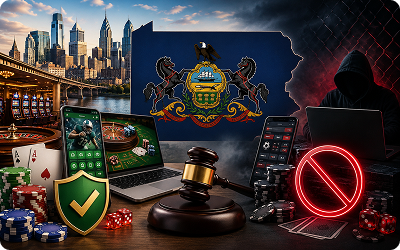
Pennsylvania has one of the most expansive and clearly regulated gambling markets in the United States. The state permits a wide variety of both land-based and online gambling activities under strict oversight. At the same time, any gambling conducted outside the regulated system is considered illegal. Understanding what is allowed—and what is not—is essential for anyone looking to gamble legally in Pennsylvania.
Legal Gambling Activities in Pennsylvania
Land-Based Casinos
Pennsylvania is home to a large number of commercial casinos offering slot machines, table games, poker rooms, and retail sportsbooks. These venues operate under licenses issued by the Pennsylvania Gaming Control Board, which enforces strict rules related to fairness, security, and responsible gaming.
Online Casinos and Online Poker
Real-money online casinos and poker are fully legal in Pennsylvania. Licensed platforms offer online slots, table games, live dealer experiences, and peer-to-peer poker. All operators must be approved by the Pennsylvania Gaming Control Board and typically partner with existing land-based casinos. Players must be at least 21 years old and physically located within state lines to participate.
Sports Betting (Retail and Online)
Sports betting is legal in Pennsylvania both in-person and online. Since launching in 2018, the state has developed one of the largest regulated sports betting markets in the country. Players can place wagers on a wide range of professional and college sports through licensed sportsbooks, provided they are within Pennsylvania when placing bets.
State Lottery
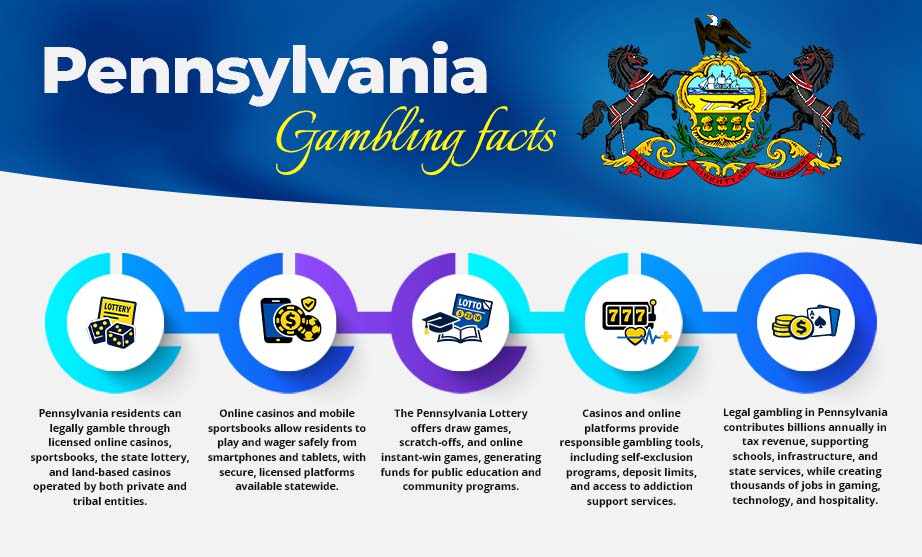
The Pennsylvania Lottery offers a variety of gambling options, including draw games, scratch-offs, and online instant-win games. Players can also participate in multi-state lotteries such as Powerball and Mega Millions. Lottery proceeds are used to support programs for older residents in the state.
Horse Racing and Pari-Mutuel Betting
Pari-mutuel wagering on horse racing is legal at licensed racetracks and through approved online betting platforms. Pennsylvania has a long-standing horse racing industry, and all wagering activities are regulated to ensure transparency and fair payouts.
Daily Fantasy Sports (DFS)
Daily fantasy sports contests are legal and regulated in Pennsylvania. Operators must obtain licenses and comply with state rules related to consumer protections, contest fairness, and age verification.
Charitable Gambling
Certain types of charitable gaming—such as bingo, raffles, and small games of chance—are permitted when conducted by licensed nonprofit organizations. These activities are regulated to ensure proceeds are used for approved charitable purposes.

Illegal or Unauthorized Gambling Activities in Pennsylvania
Unlicensed or Offshore Online Casinos
While Pennsylvania offers a robust regulated online gambling market, any website that is not licensed by the state is considered illegal. Offshore gambling sites operate outside U.S. jurisdiction and are not overseen by Pennsylvania regulators. Players using these platforms risk issues such as delayed payouts, unfair games, or lack of data protection.
Unregulated Private Gambling Operations
Operating or participating in unauthorized gambling activities—such as underground poker games, illegal sportsbooks, or private betting rings—is prohibited under Pennsylvania law. Those involved may face legal penalties.
Illegal Sports Betting Operations
All sports betting must be conducted through licensed operators. Any form of unregulated bookmaking or betting outside the approved system is illegal.
Unauthorized Gaming Machines
Slot machines and other gambling devices are only legal in licensed casinos or approved locations. Machines found in bars, convenience stores, or private establishments without authorization are illegal and subject to seizure.
Regulations, Oversight, and Regulatory Bodies in Pennsylvania
Pennsylvania’s gambling industry is primarily regulated by the Pennsylvania Gaming Control Board. This agency is responsible for licensing operators, monitoring compliance, auditing gaming systems, and enforcing consumer protection standards across both land-based and online gambling.
Additional oversight applies to specific sectors. The Pennsylvania Lottery regulates lottery products and online lottery games, while horse racing activities are supervised by the Pennsylvania State Horse Racing Commission. These bodies ensure integrity, transparency, and compliance within their respective areas.
The state also emphasizes responsible gambling. Licensed operators are required to provide tools such as deposit limits, self-exclusion programs, and access to support services for problem gambling.
Overall, Pennsylvania offers one of the most comprehensive and tightly controlled gambling environments in the U.S. Players have access to a wide range of legal options, but only when using properly licensed and regulated platforms within the state.
Gambling Laws in Neighboring States
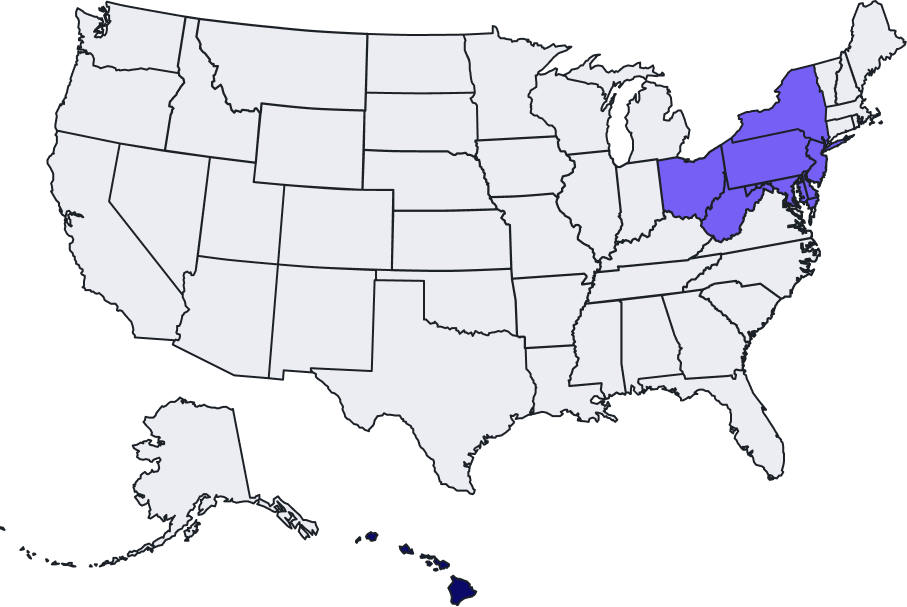
Pennsylvania is one of the most developed online gambling markets in the U.S., but its neighboring states take very different approaches—especially when it comes to online casinos and sports betting. If you’re traveling or comparing legal options, here’s how nearby states stack up.
New York
New York offers a broad range of gambling options, including commercial and tribal casinos, a state lottery, and charitable gaming. Online and mobile sports betting are fully legal and widely available. However, real-money online casinos and online poker are not currently authorized. Despite ongoing legislative discussions, players in New York still cannot legally access regulated online slots or table games within the state.
New Jersey
New Jersey is one of the most advanced gambling markets in the country. The state allows land-based casinos in Atlantic City, as well as fully regulated online casinos, online poker, and sports betting. Its legal framework is very similar to Pennsylvania’s, making it one of the few neighboring states where players have access to a complete iGaming ecosystem.
Ohio
Ohio has expanded rapidly in recent years, particularly in sports betting. Both online and retail sportsbooks are legal and regulated. The state also has a number of land-based casinos and racinos offering slot machines and table games. However, Ohio has not legalized real-money online casinos or online poker.
West Virginia
West Virginia is one of the smaller but more progressive gambling markets in the region. The state permits land-based casinos, online casinos, online poker, and sports betting. Its iGaming market is regulated and similar in structure to Pennsylvania’s, although on a smaller scale.
Maryland
Maryland offers commercial casinos, a state lottery, and legal sports betting both online and in person. However, the state has not yet legalized online casinos or online poker. Legislative efforts have been discussed, but as of 2026, iGaming remains unavailable.
Delaware
Delaware was one of the earliest adopters of online gambling. The state allows online casinos, including slots and table games, as well as sports betting. However, its market is relatively small and operates through a limited number of state-controlled platforms.
What This Means for Pennsylvania Players
Pennsylvania sits among a small group of states that offer a full range of regulated online gambling options, including casinos, poker, and sports betting. Nearby states like New Jersey and West Virginia provide similar access, while others—such as New York and Ohio—limit players to sports betting and land-based casinos.
Because of these differences, availability can change quickly once you cross state lines. In some cases, you’ll gain access to online casinos, while in others, those options disappear entirely due to local restrictions.
For players based in Pennsylvania, the state’s regulated market already covers nearly every major form of gambling, so there’s rarely a need to look elsewhere to find legal, real-money online casino options.
Playing Real Money Online Casinos in Pennsylvania
Pennsylvania is one of the few U.S. states where playing at real-money online casinos is fully legal and regulated. Since the launch of iGaming in 2019, residents have been able to access a wide range of licensed platforms offering casino games, poker, and sports betting under strict state oversight.
Online Casinos in Pennsylvania
Real-money online casinos are legal in Pennsylvania when operated by state-licensed providers. These platforms offer a full selection of games, including slots, blackjack, roulette, baccarat, live dealer games, and online poker.
All operators must be approved and regulated by the Pennsylvania Gaming Control Board, which ensures that games are fair, player funds are protected, and responsible gambling measures are in place. Most online casinos are partnered with existing land-based casinos in the state.
Players can access these platforms via desktop or mobile devices with secure payment methods and account verification systems required for all real-money play.
Land-Based Casinos in Pennsylvania
In addition to online options, Pennsylvania has a strong land-based casino industry. Licensed casinos across the state offer slot machines, table games, poker rooms, and retail sportsbooks.
These venues operate under the same regulatory authority and provide an in-person alternative for players who prefer a traditional casino experience.
Sports Betting
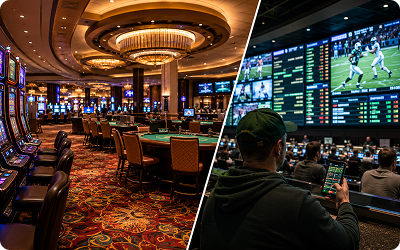
Pennsylvania also supports a large and active sports betting market. Both online and retail sportsbooks are legal, allowing players to place wagers on professional and college sports.
As with online casinos, all sports betting platforms must be licensed and regulated, and players must be physically located within Pennsylvania to place bets.
Accessing Online Casinos from Other States
Even though Pennsylvania offers legal online casinos, access is strictly tied to location. Players must be physically present within state lines to use licensed platforms.
For example, neighboring states like New York and Ohio do not currently allow online casinos, so Pennsylvania platforms will be inaccessible once you leave the state. On the other hand, states such as New Jersey and West Virginia offer similar iGaming options—but you must be physically located there to play.
Offshore Online Casinos
Some websites based outside the United States may accept Pennsylvania players, but these platforms are not licensed or regulated by state authorities. Because they operate outside U.S. jurisdiction, they do not provide the same level of consumer protection.
Using unregulated sites can carry risks, including delayed payouts, unclear terms, or limited dispute resolution. For that reason, licensed Pennsylvania operators remain the safest and most reliable choice.
Who Can Play
To legally gamble online in Pennsylvania, players must be at least 21 years old and physically located within the state. Licensed platforms use geolocation technology and identity verification to enforce these requirements.
A Practical Take
Pennsylvania already provides broad access to legal online gambling, covering nearly every major category—from casino games to poker and sports betting. For residents, this means you can play confidently within a regulated system without needing to rely on out-of-state or unlicensed alternatives.
Top Real Money Online Casino Games in Pennsylvania
Pennsylvania offers one of the most diverse selections of real-money online casino games in the United States. Because the market is fully regulated, players can access hundreds of titles across multiple categories, all tested for fairness and monitored by the Pennsylvania Gaming Control Board.
From fast-paced slots to strategy-driven table games, here are the most popular real-money online casino games available in Pennsylvania.
Online Slots
Online slots dominate the Pennsylvania iGaming market due to their accessibility and variety. Players can choose from classic three-reel machines, modern video slots, and progressive jackpots that can reach substantial prize amounts.
Many titles include features like free spins, bonus rounds, wild symbols, and themed gameplay. Because they require no prior experience, slots are often the starting point for new players.
Blackjack
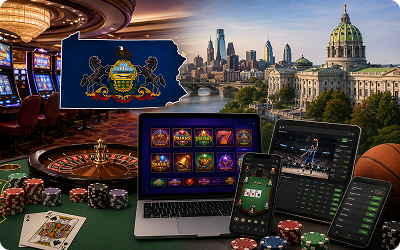
Blackjack remains one of the most widely played table games thanks to its balance of skill and chance. The objective is simple: build a hand as close to 21 as possible without exceeding it, while beating the dealer.
Pennsylvania online casinos offer multiple versions, including single-deck, multi-deck, and live dealer blackjack. Some platforms also include side bets and practice modes for players who want to refine their strategy.
Online Poker
Online poker is fully legal in Pennsylvania and attracts players who prefer competitive, skill-based gameplay. Licensed platforms offer popular variants such as Texas Hold’em and Omaha.
Players can join cash games, sit-and-go events, or multi-table tournaments with varying buy-ins. Pennsylvania also participates in multi-state agreements, which can increase player pools and lead to larger tournament prize pools.
Roulette
Roulette is a staple of both land-based and online casinos. Players place bets on numbers, colors, or groups of numbers before the wheel is spun.
Online casinos in Pennsylvania typically offer American and European roulette, along with live dealer versions that stream gameplay in real time for a more immersive experience.
Baccarat
Baccarat is known for its simplicity and quick rounds. Players choose to bet on the player hand, the banker hand, or a tie.
Both digital and live dealer formats are widely available in Pennsylvania. The straightforward gameplay makes it appealing to beginners, while higher betting limits attract more experienced players.
Live Dealer Games
Live dealer games bring a more authentic casino feel to online platforms. These games are streamed in real time, with professional dealers hosting blackjack, roulette, baccarat, and other table games.
Players can interact through chat features, creating a more engaging and social environment compared to standard digital versions.
What Players Can Expect
Because Pennsylvania regulates its online gambling market, all games must meet strict standards for fairness, security, and transparency. This ensures that outcomes are random, payouts are reliable, and player data is protected.
With such a wide variety of options available, players in Pennsylvania can easily find games that match their preferences—whether they enjoy casual slot play, strategic table games, or competitive poker environments.
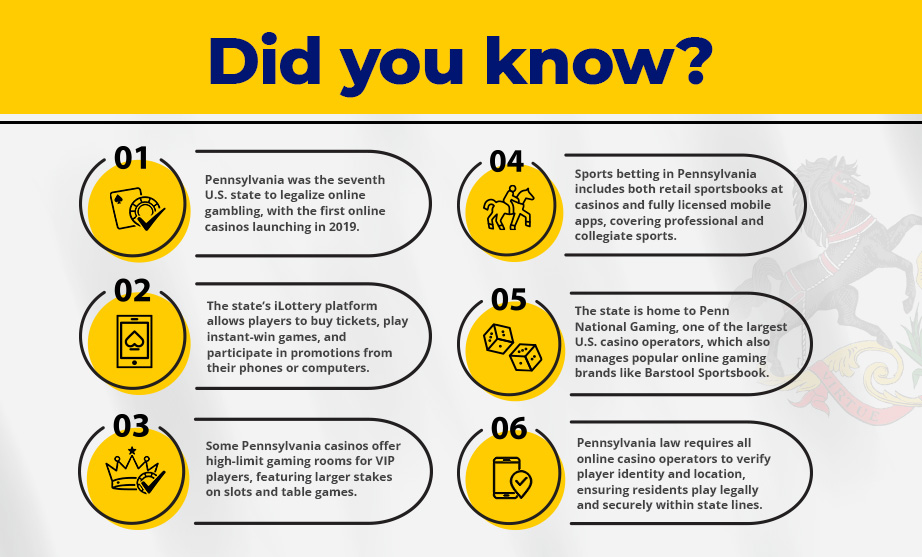
Best Pennsylvania Online Casino Bonuses in 2026
Pennsylvania’s regulated online casino market offers a wide range of bonuses designed to attract new players and keep existing ones engaged. Because all promotions must comply with rules set by the Pennsylvania Gaming Control Board, players can expect clear terms, fair conditions, and transparent wagering requirements.
Here’s a closer look at the most common online casino bonuses available in Pennsylvania.
Welcome Bonuses
Welcome offers are typically the most valuable promotion available to new players. Most Pennsylvania online casinos provide deposit match bonuses—often matching 100% of your first deposit up to a certain limit.
Some platforms also include free spins as part of the sign-up package, giving players extra chances to explore popular slot games. These offers usually come with wagering requirements, meaning bonus funds must be played through before withdrawals are allowed.
No-Deposit Bonuses
No-deposit bonuses are less common but still available at select operators. These offers provide bonus funds or free spins simply for registering an account.
They’re a low-risk way to explore a platform, though they often come with stricter wagering requirements and lower withdrawal caps compared to standard deposit bonuses.
Reload Bonuses
Reload bonuses are aimed at returning players. Instead of a one-time offer, these promotions are available on additional deposits after the initial welcome package.
They’re often smaller in value than welcome bonuses but appear more frequently—weekly or during special events—helping players extend their playtime over the long term.
Free Spins
Free spins are a staple of Pennsylvania online casino promotions, especially for slot players. These offers grant a set number of spins on selected games, often tied to new releases or featured titles.
While winnings from free spins are typically subject to wagering requirements, they allow players to try new games without committing additional funds upfront.
Cashback Offers
Cashback promotions provide a safety net by returning a percentage of net losses over a specific period. For example, a casino might offer 10–20% cashback on weekly losses.
These bonuses don’t eliminate risk, but they can help balance out losing sessions and give players extra funds to continue playing.
Loyalty and VIP Programs
Most Pennsylvania online casinos run loyalty or VIP programs that reward consistent play. Players earn points based on their wagering activity, which can be redeemed for bonus credits, free spins, or other perks.
Higher-tier members may receive benefits such as faster withdrawals, exclusive promotions, and personalized customer support, making these programs especially appealing for frequent players.
What to Keep in Mind
Even though bonuses can add value, it’s important to read the terms and conditions carefully. Wagering requirements, game restrictions, and withdrawal limits can all affect how useful a promotion actually is.
Because Pennsylvania’s market is regulated, these terms must be clearly disclosed—giving players a level of transparency that isn’t always present on unlicensed platforms.

Deposits and Withdrawal Methods at Pennsylvania Online Casinos
Because online casinos are fully legal in Pennsylvania, players have access to a wide range of secure and convenient payment methods. All transactions on licensed platforms are regulated by the Pennsylvania Gaming Control Board, ensuring safety, transparency, and proper handling of player funds.
Understanding how deposits and withdrawals work can help you choose the most efficient method for your needs.
E-Wallets
E-wallets are among the fastest and most popular payment options in Pennsylvania. Services like PayPal, Skrill, and Neteller allow players to deposit funds instantly and often receive withdrawals within 24 hours.
They’re especially valued for convenience and privacy, as you don’t need to share your banking details directly with the casino.
Credit and Debit Cards
Visa and MasterCard are widely accepted across Pennsylvania online casinos. Deposits are typically processed instantly, making cards a straightforward option for getting started.
However, withdrawals to cards can take longer and are not always supported by every operator, so players often pair this method with another option for cashouts.
Bank Transfers
For players dealing with larger amounts, bank transfers provide a dependable and secure solution. While deposits may take a bit longer—usually one to three business days—this method is commonly used for withdrawals.
Processing times for payouts can vary but generally fall within a few business days once the request is approved.
Prepaid Cards
Prepaid options such as Paysafecard and Play+ offer a more controlled way to fund your account. These methods let you deposit a fixed amount without linking your main bank account.
They’re especially useful for players who prefer gaming on mobile devices and want a fast, frictionless checkout experience.
Cryptocurrency
Unlike some offshore platforms, regulated Pennsylvania online casinos generally do not accept cryptocurrencies such as Bitcoin or Ethereum. State-licensed operators are required to use approved, traceable financial systems that comply with U.S. regulations.
Because the market is regulated, players benefit from secure payment processing, clear transaction policies, and reliable payouts—something that sets licensed platforms apart from unregulated alternatives.
What to Expect from Transactions
Most Pennsylvania online casinos process deposits instantly, while withdrawals typically take anywhere from 24 hours to several business days depending on the method and verification requirements.
Because the market is regulated, players benefit from secure payment processing, clear transaction policies, and reliable payouts—something that sets licensed platforms apart from unregulated alternatives.
Where to Gamble for Real Money in Pennsylvania
Pennsylvania offers one of the most complete gambling ecosystems in the United States. Whether you prefer playing online or visiting a casino in person, there are multiple fully legal and regulated ways to gamble for real money across the state.

Online Casinos
Real-money online casinos are widely available in Pennsylvania through licensed operators. Players can access slots, table games, live dealer experiences, and poker from their computer or mobile device.
All platforms are regulated by the Pennsylvania Gaming Control Board, ensuring fair gameplay, secure transactions, and reliable payouts. As long as you are at least 21 and physically located within Pennsylvania, you can legally play online.
Land-Based Casinos
For those who enjoy the in-person experience, Pennsylvania has a large network of commercial casinos. These venues offer everything from slot machines and table games to poker rooms and retail sportsbooks.
Many casinos also feature hotels, restaurants, and live entertainment, making them popular destinations beyond just gaming.
Sports Betting (Online and Retail)
Sports betting is fully legal and available both online and at physical locations. Players can wager on a wide range of professional and college sports through licensed sportsbooks.
Mobile betting apps make it easy to place bets from anywhere within the state, while retail sportsbooks provide a more traditional, in-person setting.
Horse Racing and Pari-Mutuel Betting
Horse racing remains a long-standing part of Pennsylvania’s gambling industry. Players can place pari-mutuel bets at racetracks or through approved online racebooks.
These options allow wagering on both local races and events held across the country.
State Lottery
The Pennsylvania Lottery offers multiple ways to play, including draw games, scratch-offs, and online instant-win games.
Tickets are widely available across the state, and online lottery platforms provide an additional level of convenience for players who prefer digital access.
Daily Fantasy Sports
Daily fantasy sports are also legal and regulated in Pennsylvania. Players can enter contests based on real-world sporting events, competing for cash prizes on licensed platforms.
This option appeals to those who enjoy skill-based competition rather than traditional casino gameplay.
Charitable Gaming
Charitable gaming is permitted under state law and includes activities like bingo, raffles, and small games of chance. These events are typically run by nonprofit organizations and are designed to raise funds for community initiatives.
A Quick Perspective
Few states offer the same level of access as Pennsylvania when it comes to legal gambling. With both online and in-person options covering nearly every category, players have the flexibility to choose how and where they want to play—without stepping outside a regulated environment.
Essential Tips for Online Gambling in Pennsylvania
Pennsylvania offers one of the most comprehensive and regulated gambling markets in the U.S., with legal access to online casinos, sports betting, and lottery games. Following these tips can help ensure a safe, enjoyable, and responsible gaming experience.
Play Only on Licensed Platforms
Always use operators licensed by the Pennsylvania Gaming Control Board. Licensed platforms are audited for fairness, employ secure encryption for transactions, and protect your personal and financial information. Avoid unregulated or offshore sites, as they operate outside U.S. law and may carry risks such as unfair games or difficulty withdrawing funds.
Set a Budget and Stick to It
Before you start playing, decide how much money you are comfortable spending and treat it as entertainment. Establishing a clear limit helps prevent overspending. Never attempt to chase losses, as doing so can escalate financial risks. Many licensed Pennsylvania platforms also provide deposit limits and session reminders to support responsible play.
Understand Bonuses and Promotions
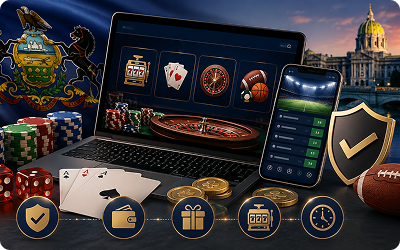
Licensed online casinos and sportsbooks in Pennsylvania often offer welcome bonuses, deposit matches, free bets, or loyalty rewards. Always read the terms and conditions carefully, paying attention to wagering requirements, eligible games, and expiration dates. Understanding how promotions work ensures that they enhance your gaming experience rather than causing confusion.
Start with Smaller Stakes or Demo Games
If you are new to a game, begin with smaller wagers or free play options when available. Demo games let you learn rules, test strategies, and gain confidence without risking significant funds. This approach is especially useful for table games like blackjack, poker, or roulette.
Manage Your Playtime
Gambling can be immersive, and long sessions may lead to fatigue or impulsive decisions. Set time limits for each session, take regular breaks, and avoid playing for extended periods. Responsible time management helps maintain focus and keeps gaming enjoyable.
Use Secure Payment Methods
Use trusted banking options such as credit/debit cards, e-wallets like PayPal or Skrill, or approved casino-specific payment solutions. Ensure the platform uses SSL encryption or other security measures to safeguard your financial information during transactions.
Don’t Chase Losses
Accept losses as part of the gambling experience. Trying to recover money by increasing wagers can lead to bigger losses and a stressful experience. Stick to your budget and take a break if your session isn’t going as planned.
Take Advantage of Responsible Gambling Tools
Many Pennsylvania operators provide tools to help players maintain control, including deposit limits, time management features, and self-exclusion options. If gambling begins to feel problematic, professional support resources such as Gamblers Anonymous and the National Council on Problem Gambling are available to assist.
By following these guidelines, Pennsylvania players can enjoy online gambling safely, responsibly, and within a fully regulated framework.
Pros and Cons of Online Gambling in Pennsylvania
Pennsylvania has a fully regulated online gambling ecosystem, including online casinos, poker, sports betting, and the state lottery. Understanding the benefits and potential drawbacks can help players make informed decisions and enjoy a safer experience.
Pros
- Convenience and Accessibility:
Residents can play online casino games, poker, or place sports bets anytime, anywhere within the state. Licensed mobile apps and websites make it easy to access a full suite of games without traveling to land-based casinos.
- Variety of Games:
Licensed Pennsylvania platforms offer a wide selection of casino games including slots, blackjack, roulette, baccarat, and live dealer tables. Sportsbooks allow wagering on professional, college, and international sporting events. The extensive variety keeps gameplay engaging and diverse.
- Bonuses and Promotions:
Online casinos and sportsbooks in Pennsylvania frequently provide welcome bonuses, deposit matches, free spins, and loyalty rewards. These promotions extend playtime and give players additional opportunities to win.
- Privacy and Security:
Licensed operators must comply with strict state regulations, including encryption and data protection standards. Your personal and financial information is secure when using regulated Pennsylvania sites.
- Flexible Payment Options:
Residents can deposit and withdraw funds using multiple secure methods such as credit/debit cards, e-wallets (PayPal, Skrill, Neteller), prepaid cards, and some cryptocurrency options. This ensures convenience and safety for all transactions.
- Responsible Gambling Tools:
Licensed platforms provide tools to help players manage their play, including deposit limits, session reminders, and self-exclusion options. Support resources like Gamblers Anonymous and the National Council on Problem Gambling are available for anyone needing assistance.
Cons
- Risk of Problem Gambling:
The 24/7 availability of online gambling can make it easy to overspend or play excessively. Players must use self-discipline, set budgets, and utilize responsible gambling tools to avoid addiction.
- Technical Issues:
Connectivity problems, app glitches, or website downtime can occasionally interrupt gameplay. Stable internet access is important for a smooth online gambling experience.
- Withdrawal Times:
While deposits are usually instant, some withdrawal methods can take several business days to process. Bonus-related wagering requirements may also delay access to winnings.
- Less Social Interaction:
Although live dealer games offer interaction with real dealers, online gambling cannot fully replicate the social environment of a land-based casino or poker room.
- Potential Over-Reliance on Promotions:
Some players may focus too heavily on bonuses and promotions, which can lead to misunderstandings if terms and wagering requirements are not carefully reviewed.
Sweepstakes and Social Casinos in Pennsylvania
Pennsylvania residents have access to a fully regulated online gambling market, including real-money casinos and sportsbooks. In addition to these options, social and sweepstakes-style platforms are also available, though they operate under different legal conditions and should be approached with care.

Sweepstakes Casinos
Sweepstakes casinos operate using virtual currencies, often referred to as “sweeps coins,” which may be redeemable for cash or prizes. In Pennsylvania, any platform offering real-money gambling must be licensed by the Pennsylvania Gaming Control Board. Sweepstakes casinos are not licensed under this framework and instead rely on promotional sweepstakes models to operate.
However, regulators have taken action against certain sweepstakes operators, including issuing cease-and-desist orders. This means these platforms exist in a legal gray area and are not formally approved or regulated in Pennsylvania. Because of this uncertainty and lack of consumer protections, residents should approach sweepstakes casinos with caution.
Social Casinos
Social casinos are fully legal in Pennsylvania as long as they use virtual currency solely for entertainment and do not allow cash redemption. Players can enjoy popular casino-style games such as slots, blackjack, poker, and roulette using virtual coins. These coins may be earned through gameplay or purchased optionally, but they have no real-world value. Social casinos provide a safe and legal way to experience casino-style gaming online without financial risk.
Key Takeaways for Pennsylvania Players
Social casinos offer a completely legal and risk-free way for Pennsylvania residents to enjoy online casino-style games. Since no real money is involved or redeemable, these platforms are ideal for entertainment, practice, and exploring different game types without financial exposure.
Sweepstakes casinos operate in a legal gray area in Pennsylvania. While they use promotional systems, they are not licensed by the state regulator and have faced enforcement actions. As a result, they do not provide the same level of security, transparency, or consumer protection as regulated platforms.
For players interested in real-money gambling, state-licensed online casinos, poker platforms, sportsbooks, and land-based casinos remain the safest and most reliable options. Using regulated services ensures fair play, secure transactions, and full compliance with Pennsylvania law.
The Future of Online Gambling in Pennsylvania
Pennsylvania has established itself as a leader in regulated online gambling, offering real-money online casinos, poker, and sports betting. With technology evolving rapidly and player demand continuing to grow, the state’s online gaming industry faces opportunities for innovation, expansion, and continued economic impact.
Rising Popularity and Player Demand
Online gambling has become a popular pastime for Pennsylvania residents. Mobile platforms and desktop access make it easy to play casino games, poker, or place sports bets from home or on the go. This convenience, combined with growing familiarity and comfort with digital platforms, is driving demand for new game types, enhanced experiences, and expanded access.
Regulatory Framework and Opportunities for Growth
Pennsylvania already maintains a strong regulatory system for online gambling, but there’s room for updates as the market evolves. Potential areas for growth include new licensing opportunities, oversight for emerging operators, and additional safeguards for online casino and sports betting products. Partnerships with land-based casinos that operate online platforms are expected to continue playing a major role in shaping the market.
Technological Innovation and Mobile Gaming
Future developments in Pennsylvania’s online gambling market are likely to be heavily focused on mobile and app-based experiences. Players can expect improvements such as live dealer games, AI-driven personalization, instant payouts, and enhanced security features. Longer-term possibilities may include immersive virtual reality or augmented reality casino experiences, offering a new level of engagement for online players.
Responsible Gambling and Safety Measures
Protecting players remains a top priority. Pennsylvania’s operators provide self-exclusion programs, deposit limits, session reminders, and access to support for gambling addiction. Advances in AI monitoring and analytics could further help identify at-risk behavior early, allowing players to enjoy gaming safely while minimizing the risk of problem gambling.
Economic Impact and Market Potential
Online gambling contributes significantly to Pennsylvania’s economy through tax revenue, job creation in technology and customer service, and support for tourism. Continued expansion could attract further investment, foster innovation, and enhance the state’s reputation as a hub for legal and regulated digital gaming.
Looking Ahead
Pennsylvania’s online gambling landscape is expected to continue evolving. With strong regulation, technological innovation, and a focus on player safety, the state is positioned to offer residents more variety, convenience, and immersive experiences. While challenges like problem gambling and platform security remain, careful oversight and strategic growth could keep Pennsylvania at the forefront of the U.S. online gaming market.
FAQs
Is online gambling legal in Pennsylvania?
Yes. Pennsylvania fully legalized online gambling in 2017. Licensed operators offer real-money online casinos, poker, and sports betting to residents who are physically located in the state. All platforms are regulated by the Pennsylvania Gaming Control Board (PGCB).
Can I play online casino games for real money in Pennsylvania?
Absolutely. Residents and visitors can legally play real-money slots, table games, and poker on state-licensed platforms, accessible via both desktop and mobile devices.
How do I know if an online casino is safe and legal in Pennsylvania?
Always check that the platform is licensed by the Pennsylvania Gaming Control Board. Legal sites must follow strict rules for fairness, security, and responsible gambling. Avoid offshore or unregulated casinos, as they carry significant legal and financial risks.
What types of online casino games can I play in Pennsylvania?
Players have access to a wide variety of games, including slots, blackjack, roulette, baccarat, video poker, and live dealer options. Many licensed platforms also offer specialty games like keno and virtual table games.
Can I use my smartphone to gamble online in Pennsylvania?
Yes. Most Pennsylvania online casinos and sportsbooks are fully mobile-compatible, offering apps or mobile-optimized websites for iOS and Android devices. You can play from anywhere within the state.
Is sports betting included in Pennsylvania online casinos?
Yes. While sports betting is regulated alongside online casinos, many platforms are affiliated with sportsbooks, allowing residents to place wagers on professional and collegiate sports directly via licensed mobile apps or retail sportsbooks.
Are there bonuses for Pennsylvania online gamblers?
Licensed platforms often provide welcome bonuses, free spins, deposit matches, and loyalty rewards. Always review the terms and conditions, including wagering requirements and withdrawal rules, before participating.
Can I play online poker from Pennsylvania?
Yes. Licensed Pennsylvania platforms offer real-money poker games and tournaments. Residents must be physically present in the state to legally access these online poker platforms.
How does online gambling in Pennsylvania compare to other states?
Pennsylvania offers a mature and fully regulated online gambling market, similar to New Jersey. Residents have a wide variety of real-money online casino, poker, and sports betting options. Compared with states that do not regulate online casinos, Pennsylvania provides legal, safe, and secure digital gaming opportunities.
Sources
World Casino Directory – For detailed information on online and land-based casinos available in Pennsylvania, as well as latest industry news and updates!
Pennsylvania Gaming Control Board – The state agency responsible for licensing, regulating, and overseeing all casino, poker, and sports betting operations in Pennsylvania.
Pennsylvania Lottery – Provides official information on lottery games, iLottery products, draw results, and responsible gambling programs in the state.
Pennsylvania State Horse Racing Commission – Regulates horse racing, pari-mutuel wagering, and advance deposit wagering platforms across Pennsylvania.
American Gaming Association – Provides research, policy analysis, and insights on U.S. gambling laws and the economic impact of gaming.
Council on Compulsive Gambling of Pennsylvania – Offers support, prevention resources, and education for residents experiencing gambling-related issues.